

Guest post by Jill Palmer
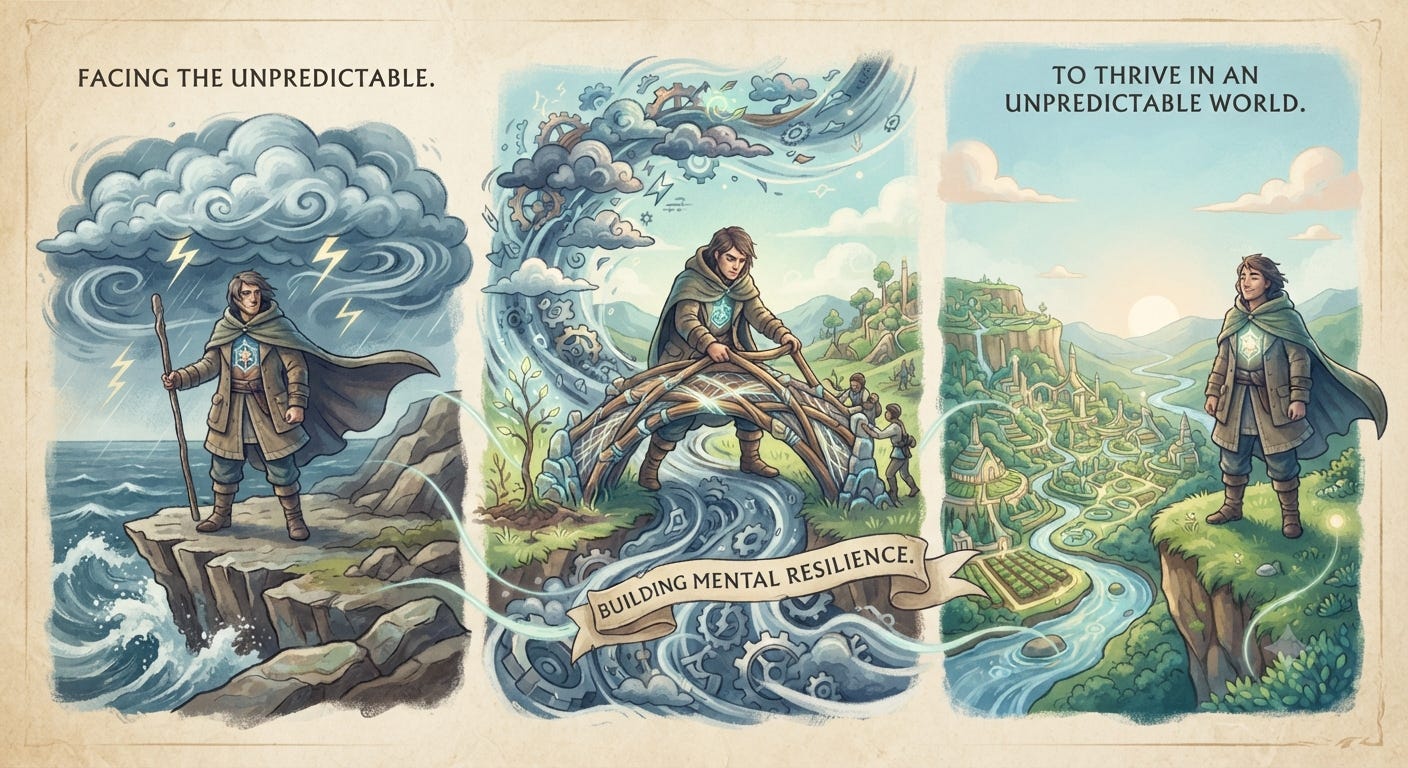
For busy professionals, caregivers, and community members trying to make steady decisions in everyday life, an unpredictable world can turn simple plans into moving targets. The core tension is clear: constant change demands attention, yet the mind has limits, and managing uncertainty can slide into overwhelm. Mental resilience is the capacity to stay functional under pressure and recover momentum after setbacks, and future-proofing the mind means strengthening that capacity before challenges arrive. With the right adaptability skills, general readers can respond to disruption with steadier judgment and more consistent follow-through.
Understanding Resilience as Adaptability
At its core, resilience is not toughness at all costs. It is the flexible skill of staying open to change, meeting uncertainty with curiosity instead of fear, and learning as you go. A practical starting point is the idea that adaptability means you can adjust to new conditions without losing your sense of direction.
This matters because rigid thinking turns surprises into crises. When you treat unknowns as information to gather, you make calmer choices and recover faster after mistakes. Over time, lifelong learning helps build the mental flexibility that keeps you effective under pressure.
Picture a sudden shift in work priorities. Fear says, “I’m behind,” but curiosity asks, “What changed, and what’s the next best move?” You adapt by updating your plan, asking one clarifying question, and building one new skill. That same approach becomes especially real during career changes and barriers at work.
Turn Career Upheaval Into a Resilience Training Ground
Career shifts, whether chosen or forced, can become a practical workout for resilience because they require you to stay steady while the “rules” change. Each transition asks you to tolerate uncertainty without freezing, to treat the unknown as information you can learn from, and to keep your identity flexible enough to spot new opportunities rather than cling to a single path. That mindset naturally strengthens continuous learning: you update skills, rethink what you’re good at, and remain open to roles you might not have considered when conditions were more predictable.
This matters because research suggests that as burnout and dissatisfaction rise, many employers are emphasizing external hiring over developing the talent they already have. The result can be widening skills gaps and fewer growth pathways, pressures that affect workers and organizations alike.
Everyday Habits for a Future-Proof Mind
These habits turn resilience from a nice idea into a trainable skill. When you practice them consistently, you build mental flexibility that holds up through surprises, setbacks, and big life changes.
Three-Breath Reset
● What it is: Pause, take three slow breaths, and unclench your jaw and shoulders.
● How often: Daily, before difficult conversations or decisions.
● Why it helps: It interrupts stress autopilot and restores clearer thinking.
Name the Feeling, Choose the Next Step
● What it is: Label the emotion, then pick one helpful action you can do in 10 minutes.
● How often: Daily, whenever you feel stuck.
● Why it helps: It builds emotional agility instead of avoidance.
Two-Line Learning Log
● What it is: Write what worked today and what you will try next time.
● How often: Weekly.
● Why it helps: It turns setbacks into usable feedback.
One Reach-Out Message
● What it is: Send a check-in text or voice note to someone you trust.
● How often: Three times per week.
● Why it helps: Supportive relationships buffer stress and widen perspective.
The “Good Day” Micro-Optimism Prompt
● What it is: Ask, opening the door just a crack as your cue, “What could make today okay?”
● How often: Daily, especially on hard mornings.
● Why it helps: It nudges realistic optimism without denying problems.
Resilience Questions People Ask Most
Q: What does “future proofing your mind” actually mean?
A: It means building skills that help you adapt when plans change, not trying to predict every problem. Look for faster recovery, clearer choices under pressure, and fewer spirals after a hard moment. Pick one practice and measure progress by how quickly you return to your baseline.
Q: How do I stay consistent when life gets chaotic?
A: Reduce the habit until it fits your busiest day, then keep that version. Tie it to something already reliable, like brushing your teeth or starting the car. Consistency comes from making the action easy to start, not from willpower.
Q: When I miss a day, should I start over?
A: No. Treat it as a data point, not a failure, and restart with the smallest next step. A quick note about what knocked you off track can help you prevent the same snag next week.
Q: How do I know if these practices are improving my mental health?
A: Track one simple signal for two weeks, like sleep quality, irritability, or how long it takes to calm down after stress. Research links resilience with both negative indicators of mental health and positive indicators of mental health, so small gains are meaningful. If your signals worsen for several weeks, consider extra support.
Q: Can I build resilience if I feel anxious or overwhelmed most days?
A: Yes, and starting small is often the safest approach. Begin with one calming action that helps quiet your mind such as slow breathing, a short walk, or a brief meditation. If anxiety feels unmanageable or includes thoughts of self harm, reach out to a professional right away.
Commit to Lifelong Adaptability Through Resilience and Learning
Change will keep testing attention, confidence, and emotional balance, and the hardest part is staying steady when progress feels uneven. The goal is not perfect control, but lifelong adaptability built through an ongoing learning mindset, supportive connections, and regular mental strength reinforcement. Over time, this approach improves future readiness by making setbacks informative rather than defining, and by motivating mental growth instead of avoidance. Resilience is a practice of adapting, not a performance you pass or fail.
Follow me on Threads or Instagram for more psychology, humor, and photography.
Schedule a Consultation
Reach out to schedule a mental health session regarding issues related to identity and decision-making, emotional regulation, religious trauma, meaning/purpose, and the struggles of communication.
How You Can Support the Newsletter
This post was free to read for all. If you like what I’m doing with Humanity’s Values and want to support my work, there are several ways to do so.
Like and Restack: Click the buttons at the top or bottom of the page to boost the post’s visibility on Substack.
Share: Send the post to friends or share it on social media.
Upgrade to Paid: A paid subscription gets you:
Full access to all new posts and the archive
Full access to all online classes
Full access to weekly presentations on various topics of psychology
The ability to post comments and engage in chat with the growing Humanity’s Values community
If you could do any of the above, I’d be very grateful. Readers like you help keep this newsletter going and growing.
Thanks!
David